Oregon businesses combining retail sales, food preparation and service should explain the complete operation when comparing ice equipment. An ice machine may support several activities, but a shared cabinet does not make their storage, handling or business-review requirements identical. Freezer Supply helps commercial buyers organize that specification and compare providers. Begin with how ice enters the working day, then identify the equipment, premises work and support needed to keep the arrangement practical.
Clarify the Oregon licensing route before the fit-out
The Oregon Department of Agriculture's food safety licensing resources direct restaurant, temporary service and mobile cart operators toward local county health departments. Describe any combination of activities when asking which authority should review the business. An existing license or equipment arrangement should not be assumed to cover a newly added operation.
Keep the menu, equipment list and layout together. If ice is used in production for other businesses rather than only direct service, state that clearly. The commercial machine overview and industrial equipment guide help frame different applications without choosing a category from cabinet size alone.
Separate competing draws from the same reserve
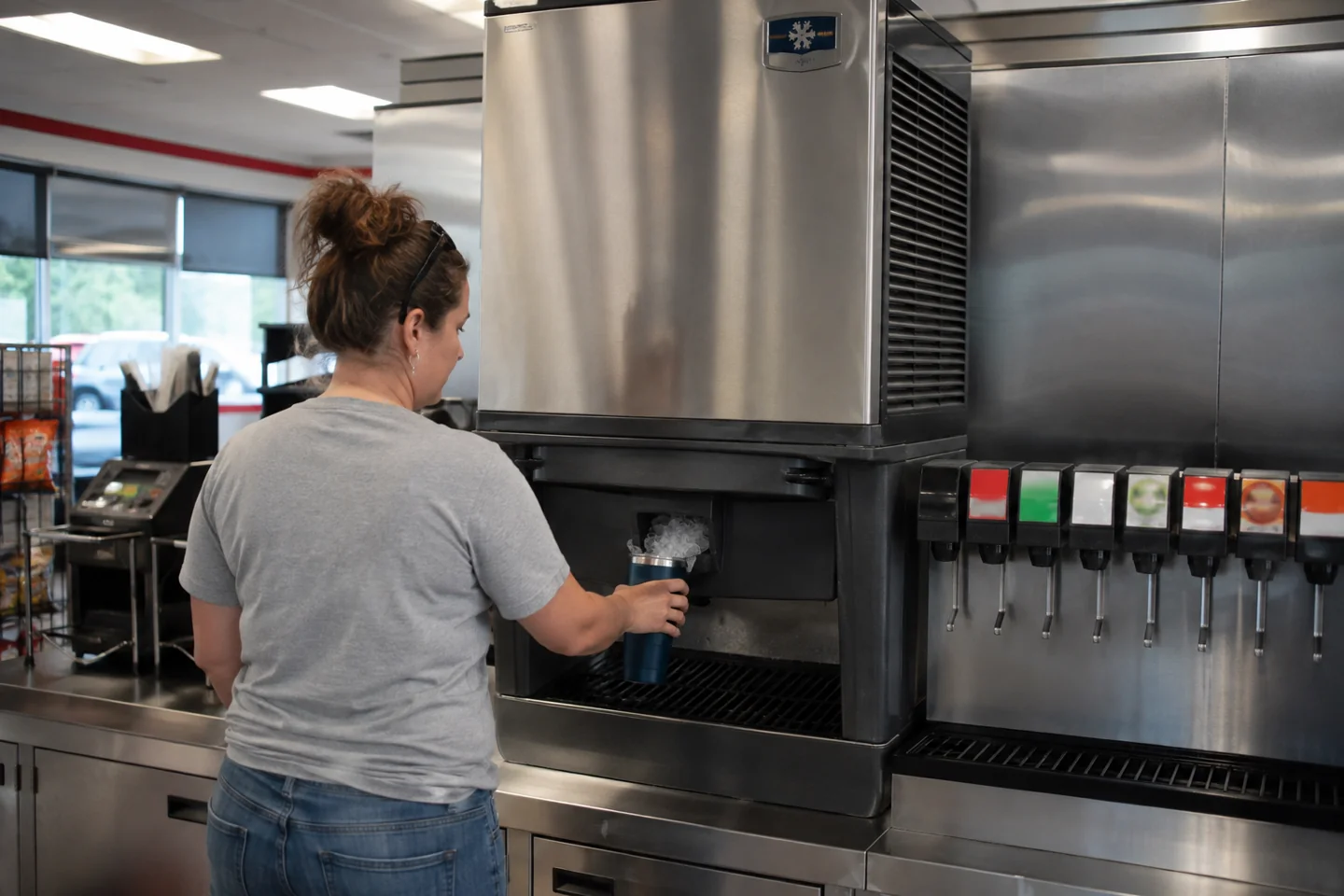
A hypothetical Oregon retail food business adding a drinks counter might draw ice for display preparation before the counter opens. The buying brief should show both uses and when they occur. An average daily total can hide the reserve needed immediately before customers begin ordering.
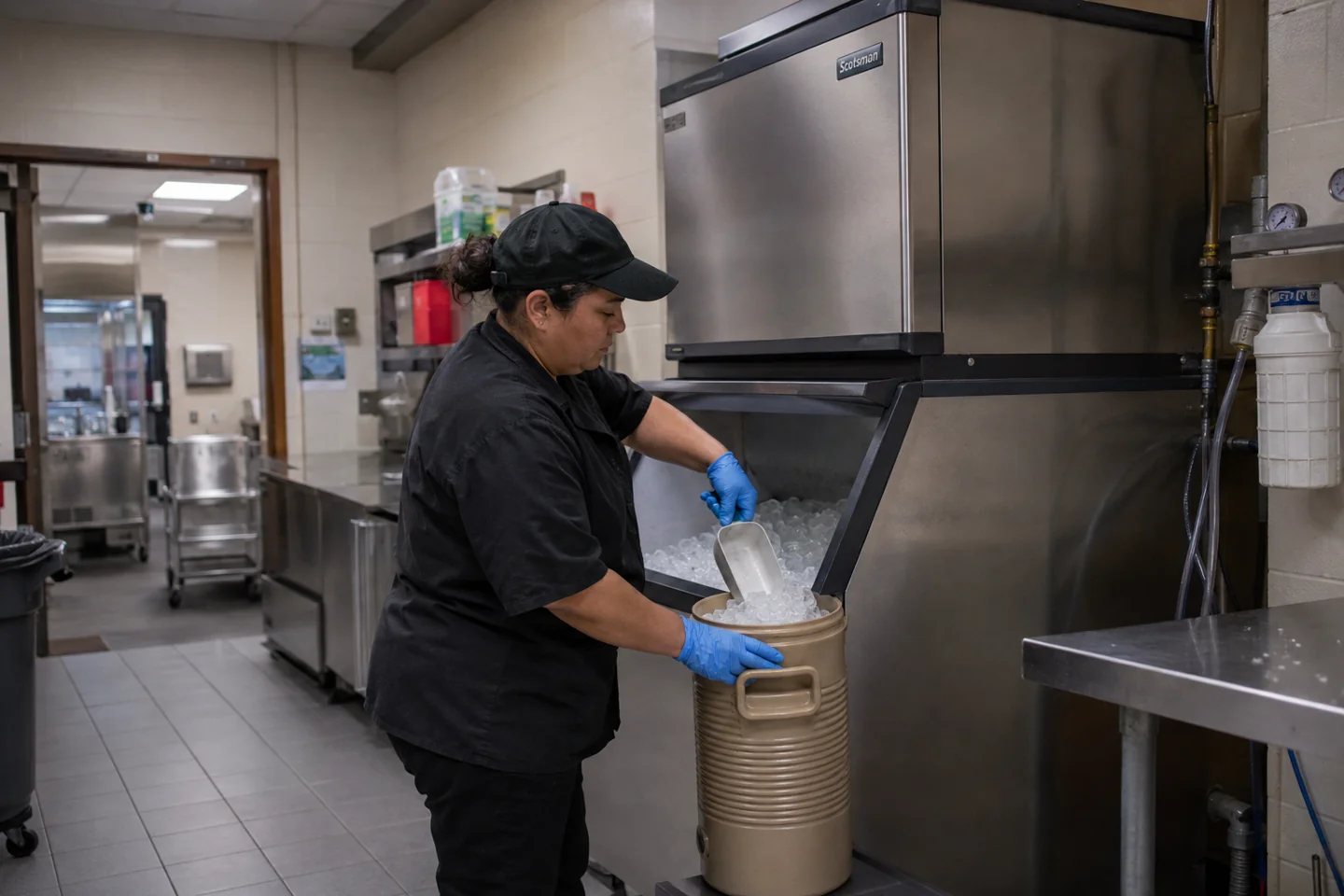
Use the storage selection guide to distinguish stock from ongoing production. Ask providers whether their proposal resolves output, reserve or working-route limitations. A second installation should solve a documented problem and be compared with its additional connection and maintenance obligations.
Specify ice form separately for each application. The cube and flake comparison supports questions about different uses, while actual equipment and dispenser compatibility should be confirmed from manufacturer documentation. Keep speculative growth outside the confirmed base requirement.
Coordinate installation with the completed layout
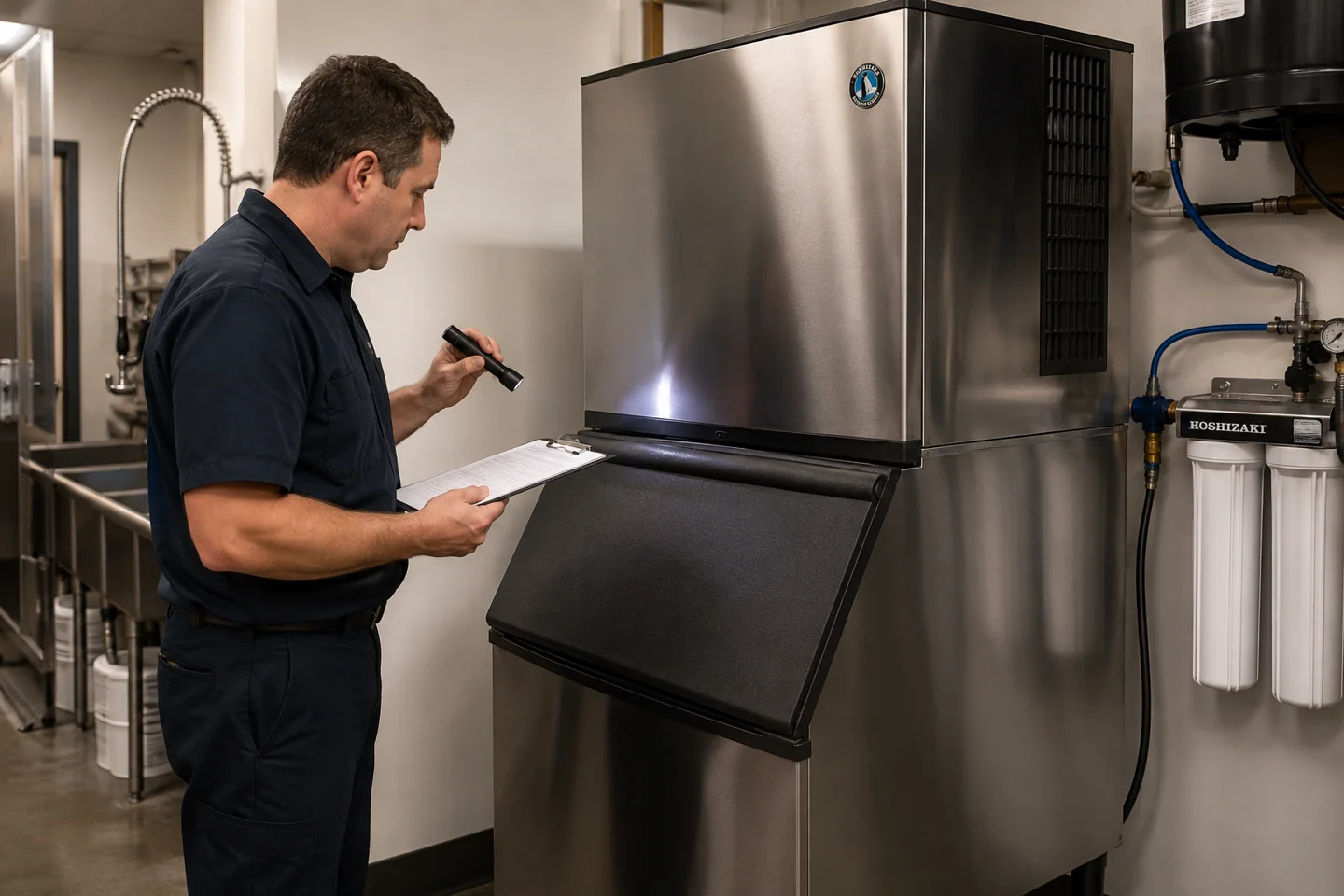
Show qualified installers the production, storage and collection positions together. Ask them to assess water provision, treatment, drainage, electrical supply, heat rejection and required clearances. Include adjacent fixtures and the access needed for service after the premises is fitted out.
Assign property alterations to the responsible contractor and agree who checks readiness before delivery. Clarify removal of old equipment, ownership of retained components, commissioning and staff instruction. A delivery estimate should not be mistaken for a complete installation schedule.
Routine care needs an identified owner when several teams share the machine. Keep model instructions, completed cleaning records and reporting contacts accessible. Distinguish prescribed maintenance from warranty claims and paid repair coverage in the operating plan.
Compare Oregon prices by complete responsibility
Request itemized machine, storage, treatment, transport, connections and startup costs. Ask what is excluded from the price, particularly building work and components serving another activity. Compare rental and purchase proposals over the same period, including consumables and support conditions.
Our buyer's guide checklist helps examine renewal, relocation and equipment return terms. Compare Oregon ice machine prices with the full operating description and shared-use schedule attached, so providers can explain how their equipment fits the business rather than quote only its most obvious service counter.